Why can't a robot fold your laundry?
Four companies say a robot will soon fold your laundry, for $8,000 to $20,000. I dug into all four. Here's who's actually closest, and the catch nobody puts in the demo.

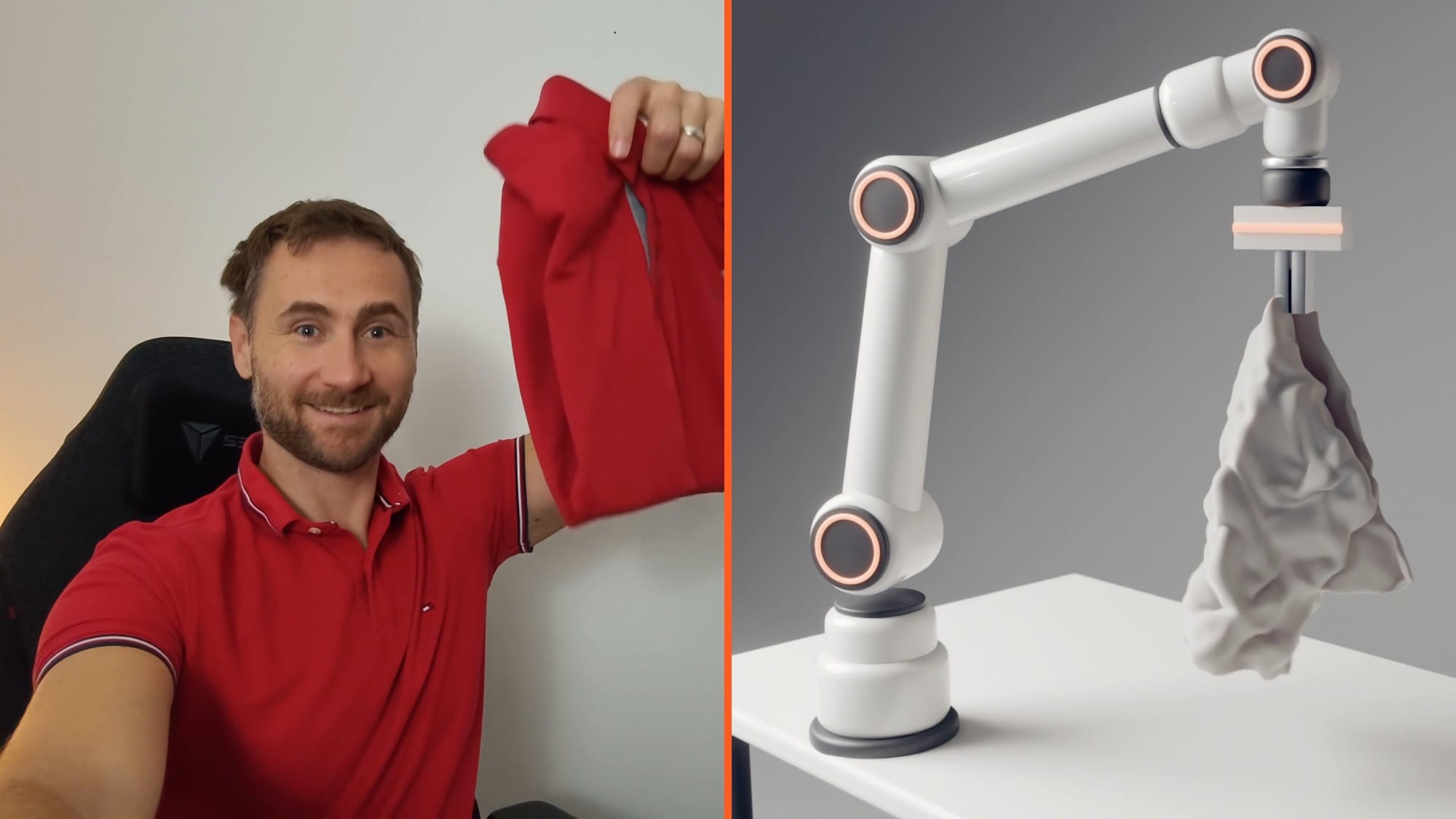
In 2010, the best laundry-folding robot in the world needed about 20 minutes to fold one towel.
A five-year-old can fold a T-shirt without thinking about it.
In 2026, you can pre-order a robot that folds your laundry at home. Four companies say they're close. Prices run from $8,000 to $20,000.
So is it real, or is it a very expensive demo? I dug into all four. Here's the short version, and the full episode is below.
1. Everyone's success rate is "great." Nobody's is comparable.
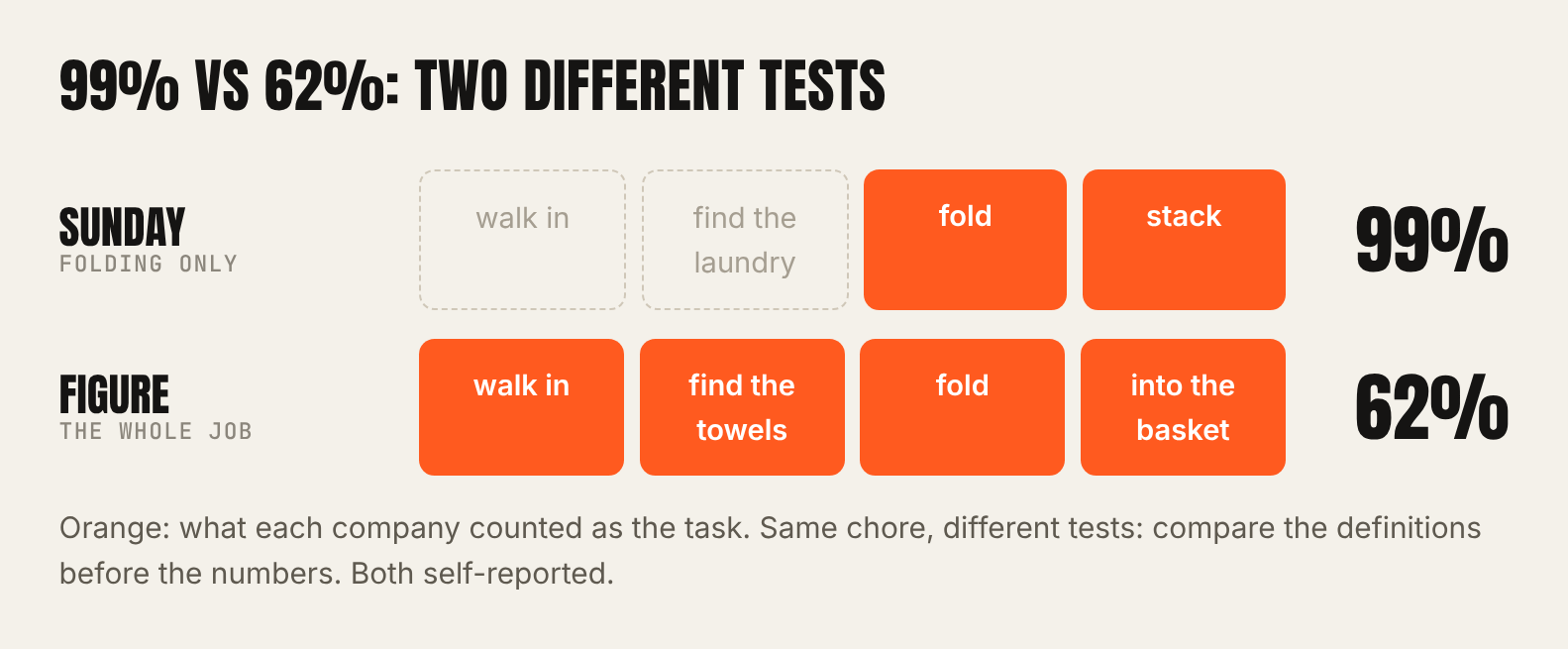
Sunday Robotics says its robot folds laundry with 99% success. Figure published 62% on towels.
Is one of them lying? Probably not. Figure's robot had to walk into the room, find the towels, fold them and drop them in a basket, on legs. Sunday measured the folding. Different jobs, different definitions of "success," and both companies graded their own homework.
When you see a number in a robot demo, ask what was actually being measured.
2. The robots got slower. That's the good news.
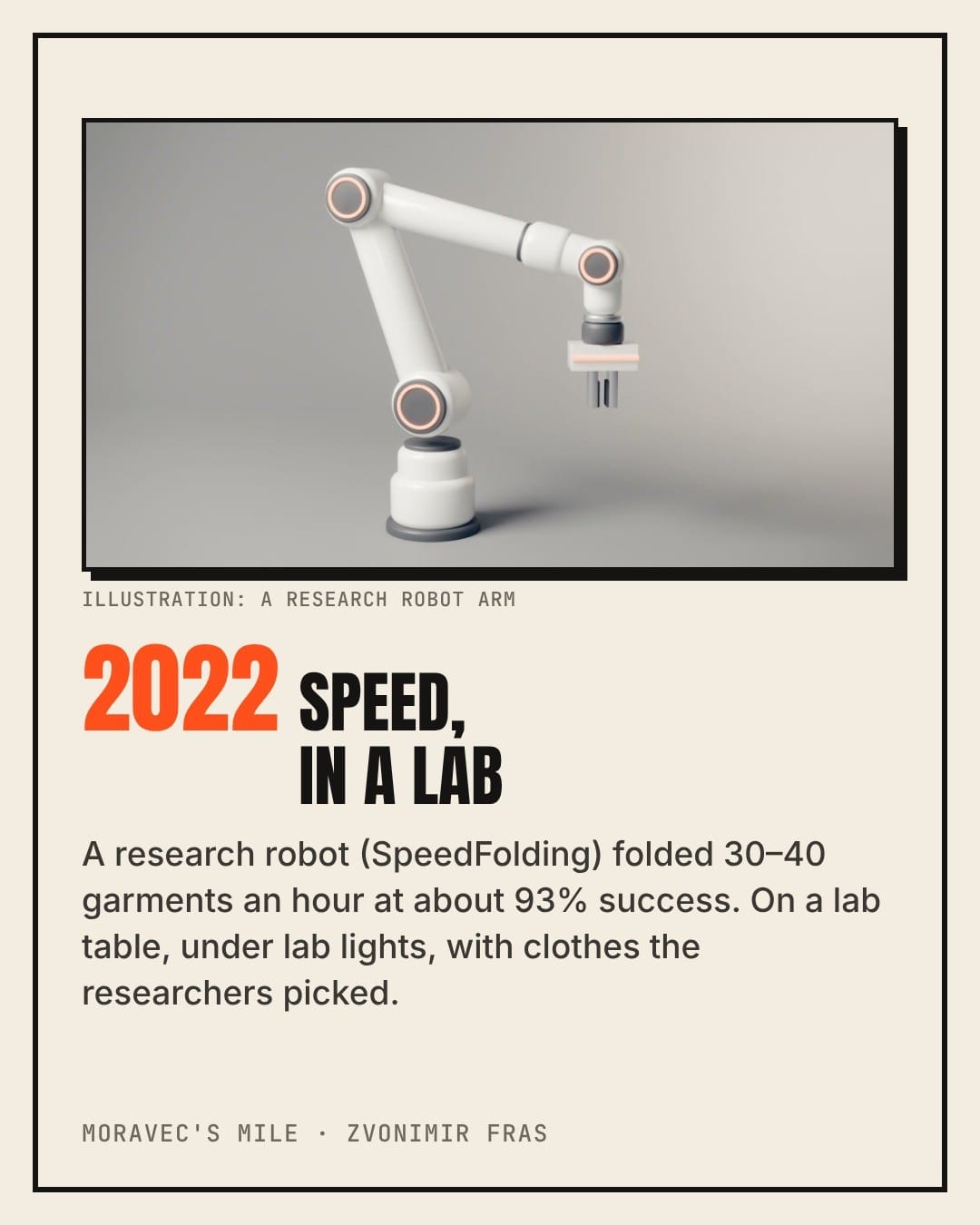
In 2022, a research robot folded 30 to 40 garments an hour. In a lab. With clothes the researchers picked.
Sunday's home robot takes 2 minutes 13 seconds per item, in homes it has never seen. Blackout curtains. Inside-out shirts. Baby clothes. A kid with LEGO.
The test got way harder. Speed is the easy part to fix.
3. Your robot might come with a secret human.
Almost every home robot you can pre-order in 2026 sometimes has a person driving it remotely when it gets stuck. Weave, 1X and Sunday each handle that differently: who can look through the cameras, when, and which rooms are off limits.
Before you buy one, read that part of the fine print.
4. There's no internet of folded shirts.
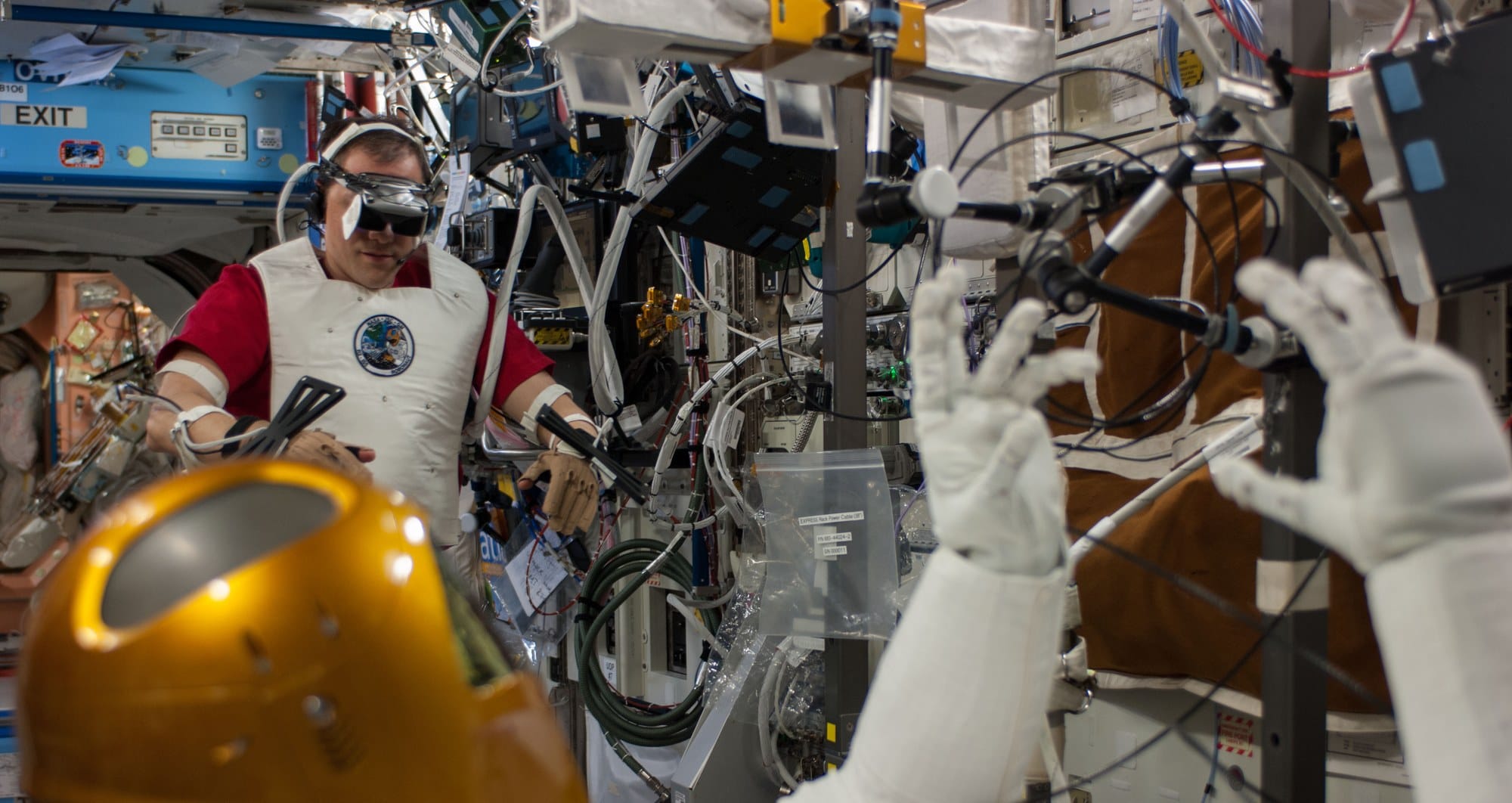
ChatGPT learned from the whole internet. There's no internet of people folding laundry. Every example a robot learns from has to be recorded on purpose: remote control, sensor gloves, videos of people, or simulation.
My bet: the company that finds the cheapest way to get good data wins. Even if its robot is the ugliest one in the room.
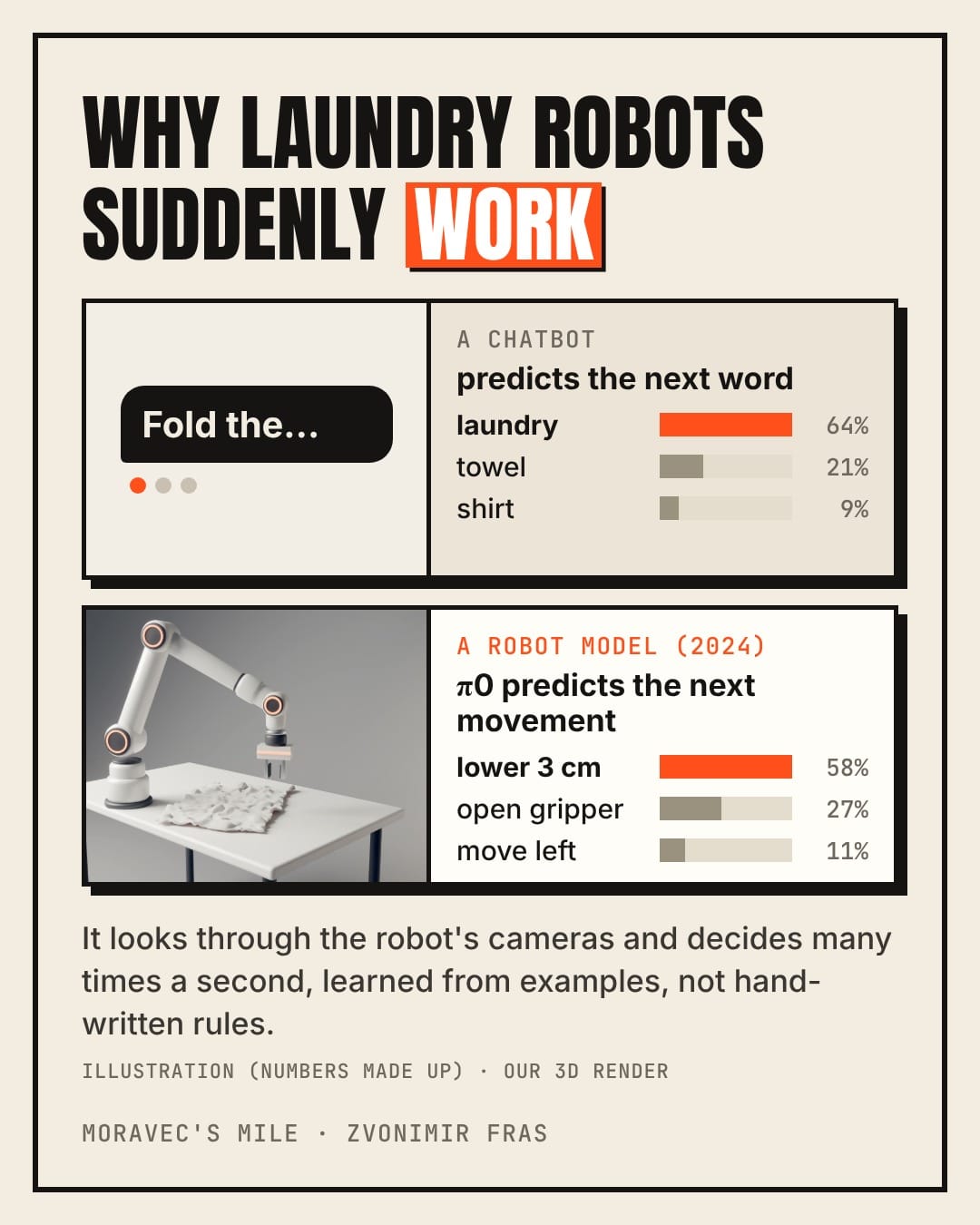
So how far is it from your living room?
I track every chore on a road with five milestones, from "worked once in a lab" to "it's in ordinary homes everywhere." Laundry is at milestone 4: robots you can pre-order.
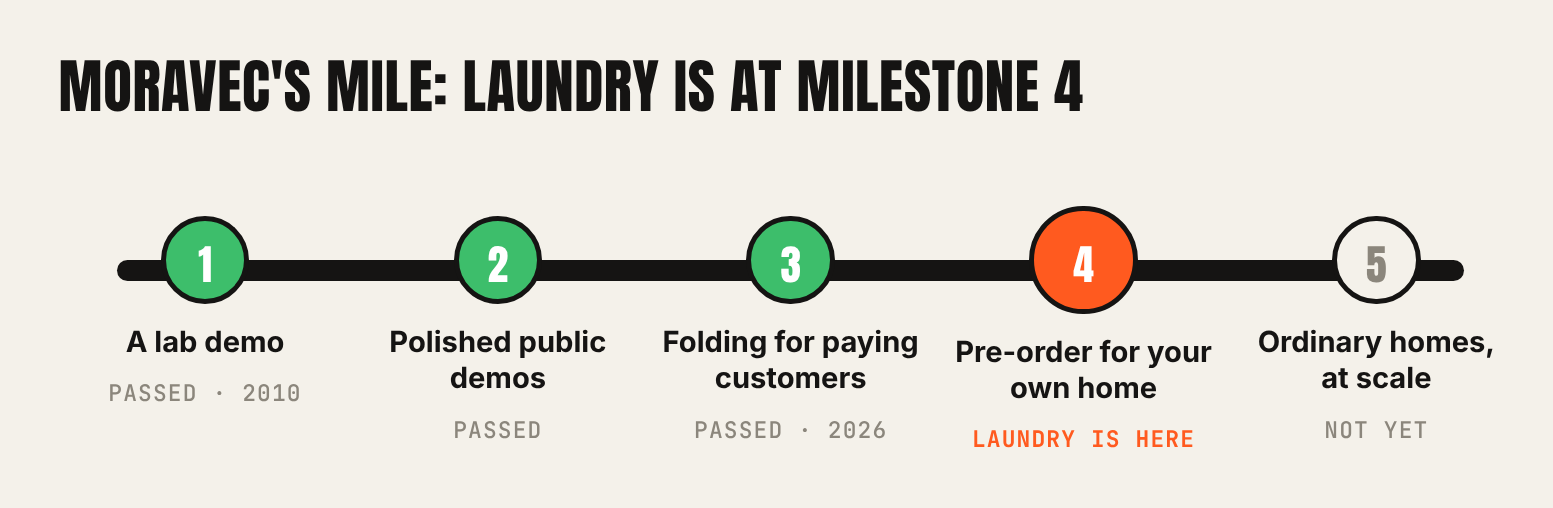
What's left is price and trust. Not speed. If it folds while you sleep, two minutes a shirt is fine.
Watch the full episode on YouTube and subscribe there for the next one. Coming up soon: Startup Graveyard, starting with Jibo, a robot whose company raised $73 million and then shut down. What killed it was visible in the pitch.
One question for you: would you let a robot fold your laundry? What's the most you'd pay for it? Hit reply. I read every answer.