Not having a quest is making you stressed. Here's the science.
That background hum of anxiety that makes every email feel like a crisis might not be burnout. It might be something more fundamental.

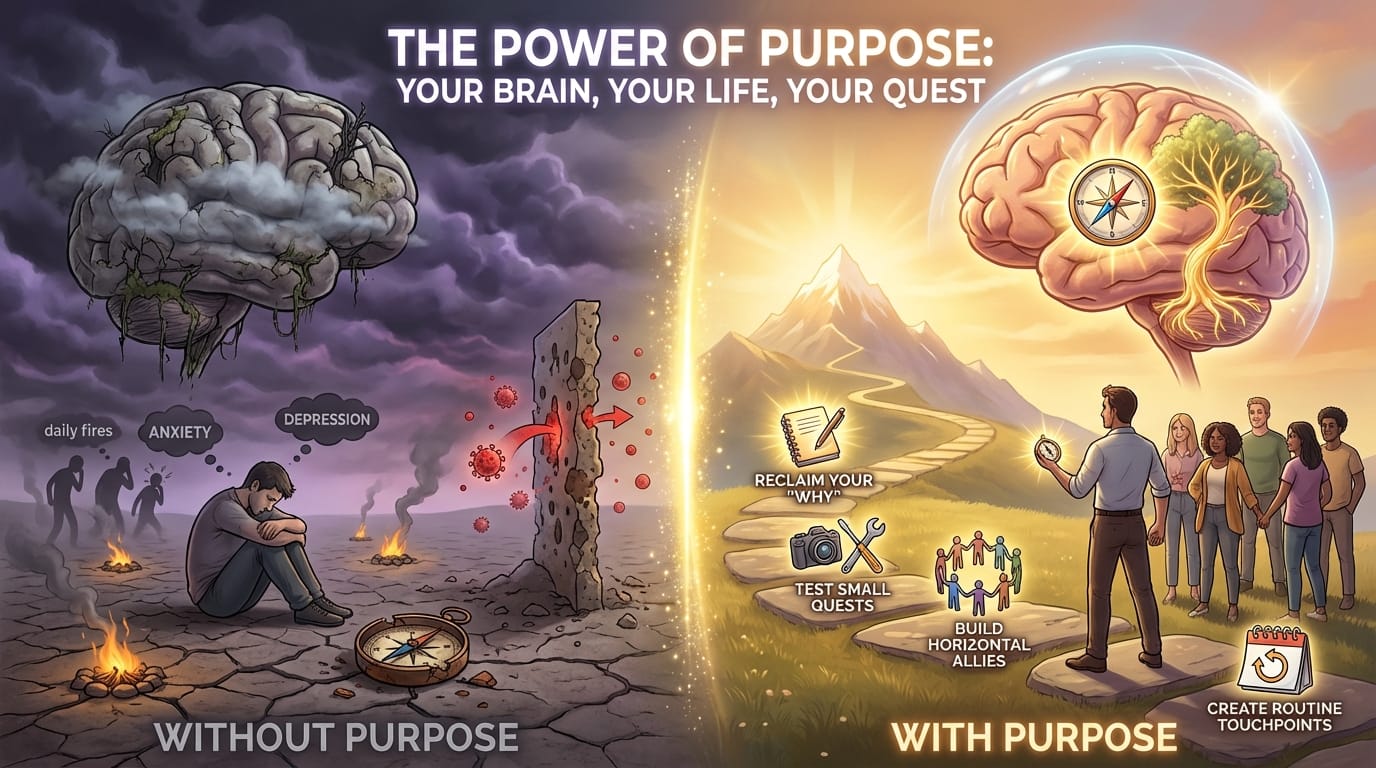
Here it is in video form. Also my most viewed short this week, so I decided to expand on it a bit for you. (Subscribe?)
Your brain on purpose (vs. without it)
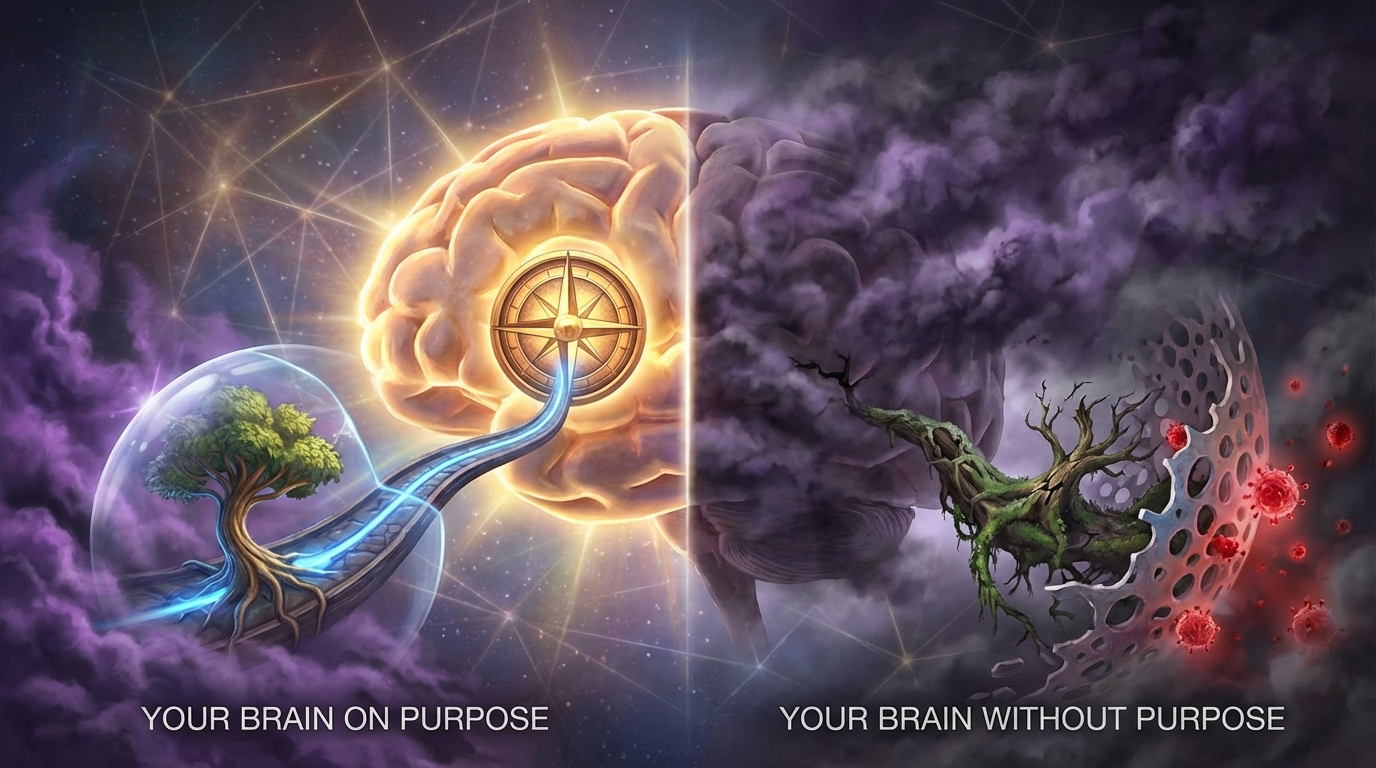
When researchers tracked people with strong purpose in life, they found something remarkable: these folks consistently experienced less perceived stress and maintained more positive worldviews even during challenging times.
But here's where it gets interesting.
(You can skip to "What you can do" below if you don't care about scientific details)
People with higher purpose show sustained activation in their ventral striatum, the brain region responsible for motivation and engagement. This leads to lower cortisol output. Meaning your stress hormone stays in check even when life throws chaos your way.
A study examining cortisol responses during acute social stress found that while purpose didn't prevent the initial stress response, it predicted significantly faster recovery to baseline levels. Think of it like this: purposeful people get stressed like everyone else, but they bounce back faster.
The hippocampus (your brain's learning and memory center) shows better microstructural health in people with greater life purpose. This structure is particularly vulnerable to chronic stress, but purpose appears to buffer against that damage.
Lower levels of purpose are associated with increased immune system sensitivity, specifically higher IL-6 levels with repeated stress exposure. Each stressful event hits harder when you lack purpose.
The young adult crisis
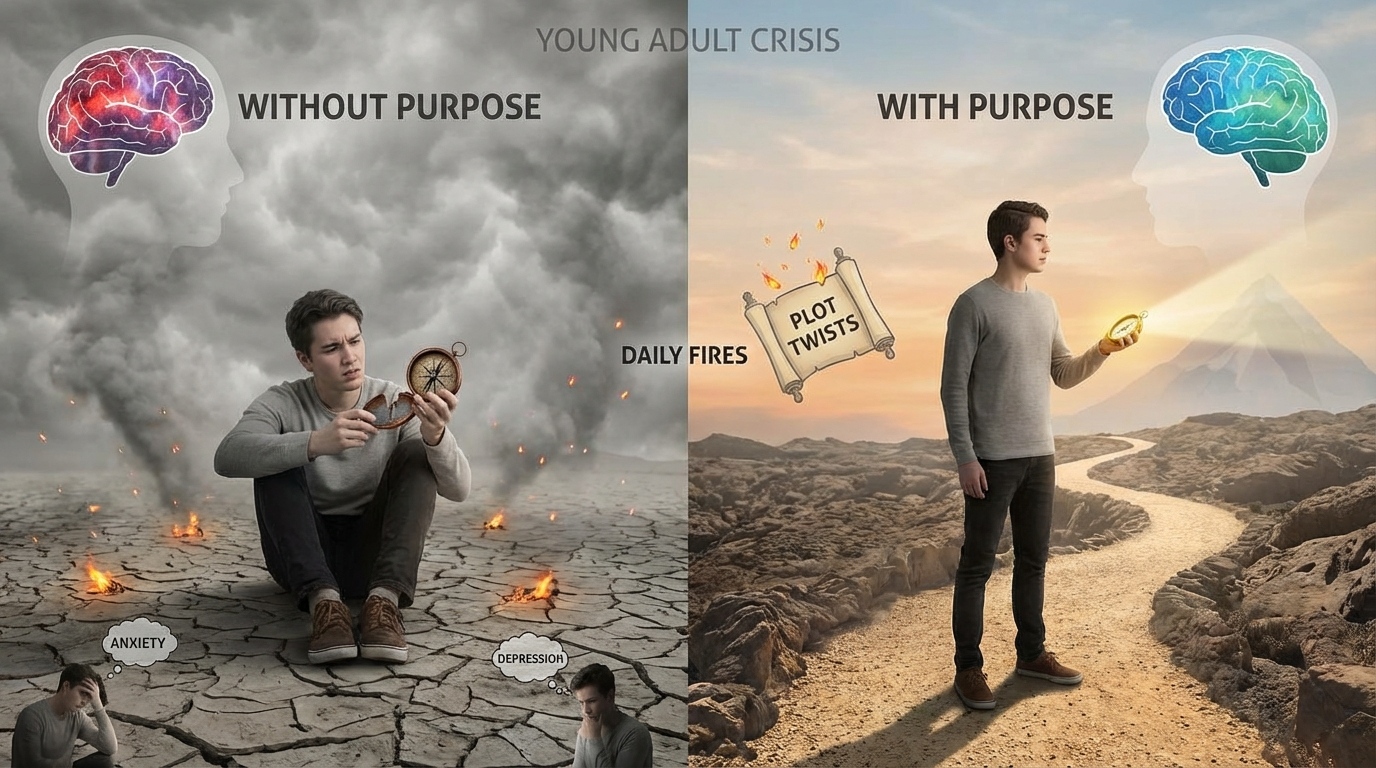
Harvard's Graduate School of Education found that 58% of young adults felt their lives lacked meaning or purpose. That's not a rounding error - that's 3 out of 5 people wandering through life without a compass.
As a consequence, young adults report anxiety and depression at twice the rate of teenagers. 36% are experiencing anxiety compared to 18% of teens, and 29% reporting depression versus 15% of teens.
No quest? Daily fires feel like hell. With a quest? They're just plot twists.
Research tracking daily stressors found that people with higher purpose reported reduced physical symptoms and negative affect on stressful days. The stressors still happened. They just didn't wreck them.
Laboratory studies measuring emotional recovery show that individuals with higher purpose demonstrate better automatic regulation of negative emotions, specifically faster recovery from negative stimuli.
Same chaos. Different response.
Here's what you can do
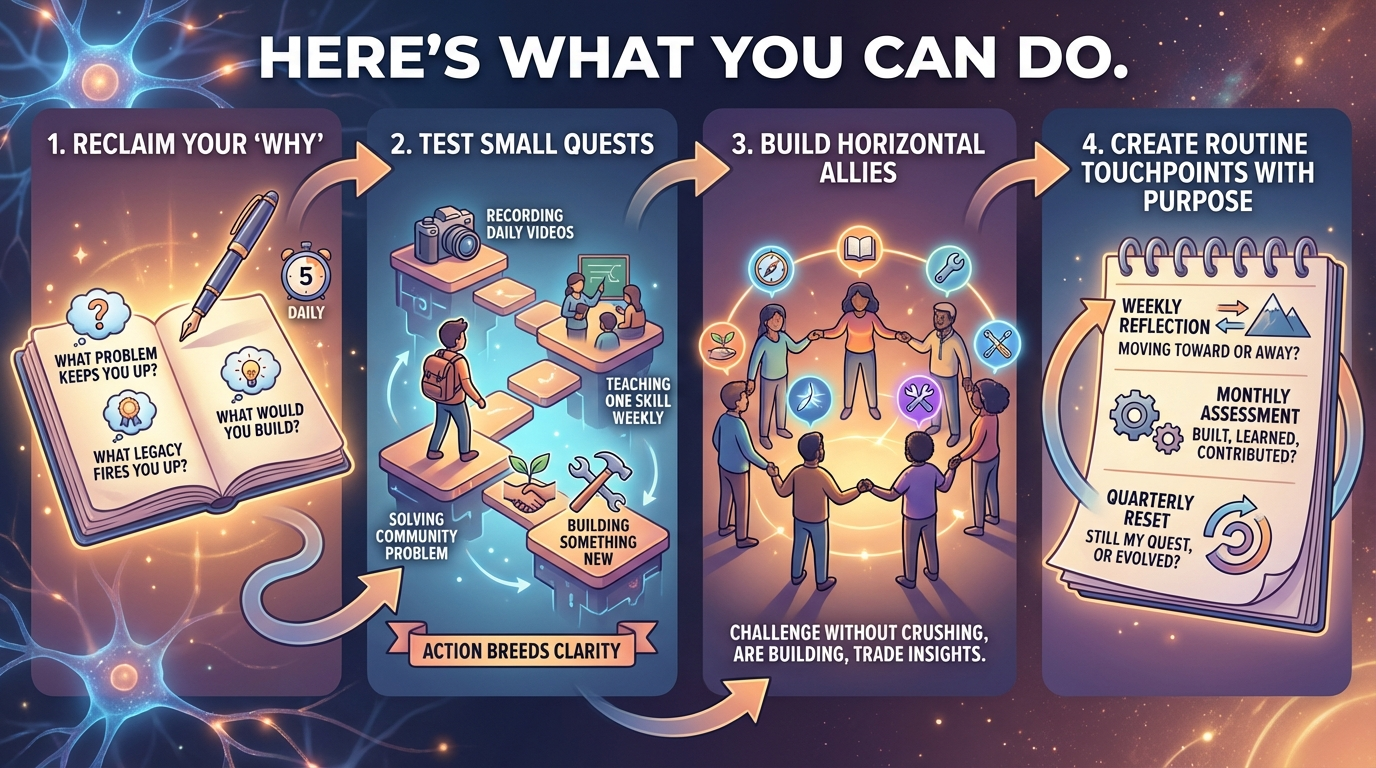
1. Reclaim your "Why"
Not the Instagram-worthy version. The real one.
Journal for 5 minutes daily:
- What problem keeps you up at night?
- What legacy fires you up?
- If money wasn't an issue, what would you build?
The goal isn't to find THE answer immediately. It's to start the conversation with yourself.
2. Test small quests
Purpose isn't found in meditation retreats. It's built through action.
Pick one micro-quest and commit for 30 days.
Examples:
- Recording daily videos (like me)
- Teaching one skill to someone weekly
- Solving one specific problem in your community
- Building something that didn't exist before
Action breeds clarity. Clarity breeds purpose.
3. Build horizontal allies
The research identifies relationship deficits as a key driver. 44% of young adults reported not mattering to others, and 34% reported loneliness. That's sad...
You need people who are on their own quests. Not competitors. Not mentors. Equals.
The "average of 5 people" thing is real, but quality matters more than quantity. Find people who:
- Challenge your thinking without crushing your spirit
- Are building something themselves
- Trade insights, not just pleasantries
4. Create routine touchpoints with purpose
Studies show that dispositional purpose helps manage stress through regular routines and better regulation when stressors occur
Weekly reflection:
Am I moving toward my quest or away from it? Monthly assessment: What did I build, learn, or contribute?
Quarterly reset:
Is this still my quest, or has it evolved?
The science is clear
Purpose literally changes your brain's structure and stress response
You're not failing at life because you can't handle the stress. You're stressed because you're trying to handle life without a north star.
The daily fires will keep coming. The question is: are they burning you down, or are they helping you forge something bigger?
Your move.
Cheers, Zvonimir